
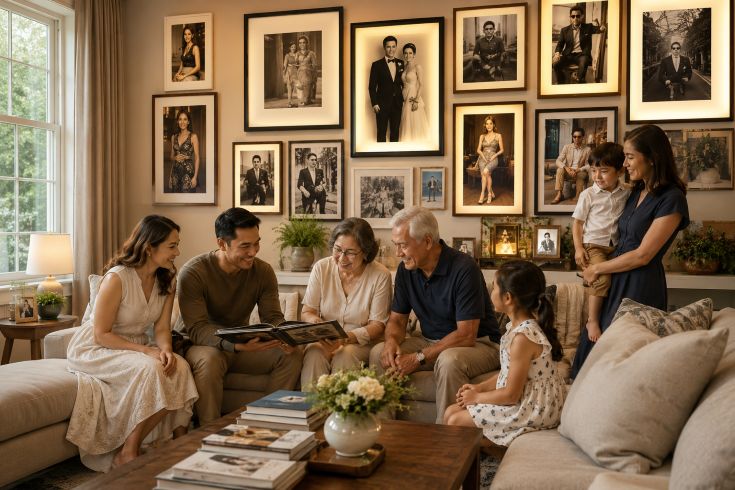
The National Institute on Aging notes that photographs and familiar visual objects can help strengthen emotional connection and memory recall, especially in multigenerational households. A framed graduation portrait, a wedding image displayed in the hallway, or an old fashion photograph tucked beside newer family pictures often becomes more than decoration. These visual reminders quietly shape how families understand identity, belonging, and continuity across time.
Many modern homes now combine traditional framed prints with illuminated displays and gallery-style memory walls inspired by museums and event spaces. Families planning anniversary celebrations or preserving milestone portraits sometimes research services like Duratrans printing when exploring backlit displays for photo exhibits, illuminated portraits, or fashion-inspired home installations. The growing interest reflects how visual storytelling has moved beyond albums and into shared living spaces.
When Personal History Becomes Part of Interior Space
Older generations often preserved memories through carefully arranged albums stored in cabinets or displayed during special occasions. Younger family members, shaped by digital photography and social media culture, tend to favor visible and accessible displays. Phones hold thousands of images, yet many families still return to printed photographs when creating emotional connection inside a home.
This contrast creates an interesting tension. One generation values preservation through safekeeping. Another prefers visibility and daily interaction. Yet both approaches share the same goal: protecting memory.
A dining room wall covered with black-and-white portraits can reveal decades of family history without a single conversation. A fashion photo from the 1980s showing a mother in a handmade dress may later influence a granddaughter’s wedding style. Clothing, hairstyles, and event photography become visual markers of changing eras. Over time, these images shape how family members understand tradition and personal identity.
The Library of Congress has repeatedly emphasized the cultural importance of preserving family photographs because they document everyday social history that formal archives often overlook. A casual birthday picture may later reveal fashion trends, interior design preferences, or social customs tied to a particular decade.
The Debate Between Minimalism and Memory Preservation
Modern interior design trends often encourage clean walls, reduced clutter, and simplified living spaces. Meanwhile, many families continue to hold emotional attachment to extensive photo collections, framed certificates, and event portraits. This creates a practical and emotional debate inside shared homes.
Some family members feel comforted by visible reminders of the past. Others prefer calmer environments without large visual displays. The disagreement is rarely about decoration alone. It reflects different ideas about memory, privacy, and emotional expression.
A grandmother may want every grandchild represented on the living room wall. A younger homeowner may prefer a single curated shelf with a few selected images. Neither perspective is entirely wrong. One prioritizes emotional abundance while the other values spatial balance.
Design experts interviewed by Architectural Digest frequently note that personal photographs can strengthen a sense of warmth and identity in residential spaces when displayed thoughtfully. Instead of overwhelming a room, carefully arranged visual collections can create emotional depth and continuity.
This shift explains why many households now use hybrid approaches. Some create rotating gallery walls where seasonal or milestone photos change throughout the year. Others digitize older images while preserving selected printed portraits in visible spaces.
Fashion Photography as Family History
Fashion often enters family storytelling in subtle ways. A formal portrait from a graduation ceremony may preserve clothing styles tied to a specific era. Wedding photos frequently capture not only relationships but also cultural expectations surrounding beauty, celebration, and social status.
Across generations, these images become reference points. Children compare hairstyles across decades. Parents revisit old event photos before planning modern celebrations. Relatives studying inherited garments sometimes rely on photographs to understand how those pieces were originally worn.
The Victoria and Albert Museum has described fashion photography as an important cultural record because clothing communicates social identity, economic conditions, and artistic influence. Inside families, the effect becomes deeply personal. A leather jacket worn by a father in the 1990s may later appear in a grandson’s engagement photos. Visual memory turns fashion into emotional inheritance.
Large milestone events also contribute to this evolving archive. Weddings, reunions, baptisms, and anniversaries generate carefully staged photography designed for long-term remembrance. Many families now explore creative ways families and fashion events build memorable photo spaces when planning event galleries and portrait areas that encourage shared experiences and lasting visual records. Event galleries displayed after celebrations often become temporary museums of family identity.
Some households now experiment with illuminated photo panels, backlit portrait displays, and translucent wall prints inspired by gallery installations. These techniques borrow ideas from commercial exhibits while adapting them for personal storytelling. Soft lighting around portraits can create atmosphere while helping old photographs remain visible in darker interior spaces.
Digital Convenience Versus Physical Presence
Digital storage has transformed how families manage visual memories. Thousands of photos can now exist inside cloud accounts or external drives without occupying physical space. Convenience has improved preservation in many ways. Images can be duplicated, restored, and shared instantly across countries.
Yet research from Psychology Today suggests that physical photographs often create stronger emotional engagement than images viewed briefly on screens. Printed photos encourage longer attention and shared interaction. People stop, point, remember, and discuss.
This difference matters in shared family environments. A hallway portrait naturally invites conversation between generations. An image buried inside a phone gallery rarely creates the same spontaneous interaction.
Physical displays also influence children differently. Seeing family photos regularly displayed inside the home may strengthen a sense of belonging and continuity. Development specialists from The Center for Parent and Teen Communication have discussed how visible family narratives can help children build emotional security and identity awareness.
At the same time, digital tools offer important benefits for preservation. Older photographs damaged by humidity or age can be restored through scanning. Family members living abroad can contribute to collaborative digital archives. The challenge is no longer choosing between digital and physical memory. Most families now combine both.
Shared Spaces as Living Archives
Homes often evolve into quiet archives shaped by everyday decisions. A framed portrait near the staircase, a collection of event photos in the hallway, or an illuminated anniversary display in the dining area all contribute to a layered visual history.
These displays do more than preserve faces. They preserve relationships, values, and transitions between generations. The fashion choices captured in portraits reveal changing cultural influences. Event photography reflects shifting family structures and traditions. Even the way photographs are displayed tells a story about the era in which they were chosen.
The tension between minimal design and emotional preservation will likely continue as homes become more digitally integrated. Still, families repeatedly return to visual memory because photographs provide something technology alone cannot fully replace: physical presence tied to emotional context.
Memory walls, translucent prints, illuminated displays, and framed portraits all represent evolving forms of the same human instinct. Families want to see themselves reflected in the spaces they share. They want reminders that personal history continues across generations, even as styles, technologies, and living environments change.
Over time, these visual collections become less about decoration and more about continuity. A single photograph can connect grandparents, parents, and children within one shared moment. That quiet connection is often what gives a house its strongest sense of home.
 Families begin to appreciate comfortable fashion trends more as modern parenting is associated with an unpredictable and hectic lifestyle. Breathable materials, relaxed silhouettes, and versatile shoes form the new fashion trends for families. Comfortable outfits ensure convenience and relieve parents from unnecessary stress.